Selected Case Studies — Maju J. Mathew
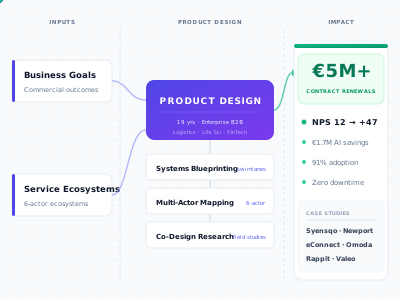
Nine enterprise service design and UX projects with verified outcomes across life sciences, logistics, developer tools, retail, AI/fintech, automotive R&D, and healthcare industries.
eConnect: AI Invoice Processing — AI / FinTech
Role: Lead UX Strategist. Duration: 12 months (6-month trust-building rollout + 6-month optimisation). Client: eConnect, AI invoice automation platform, Netherlands.
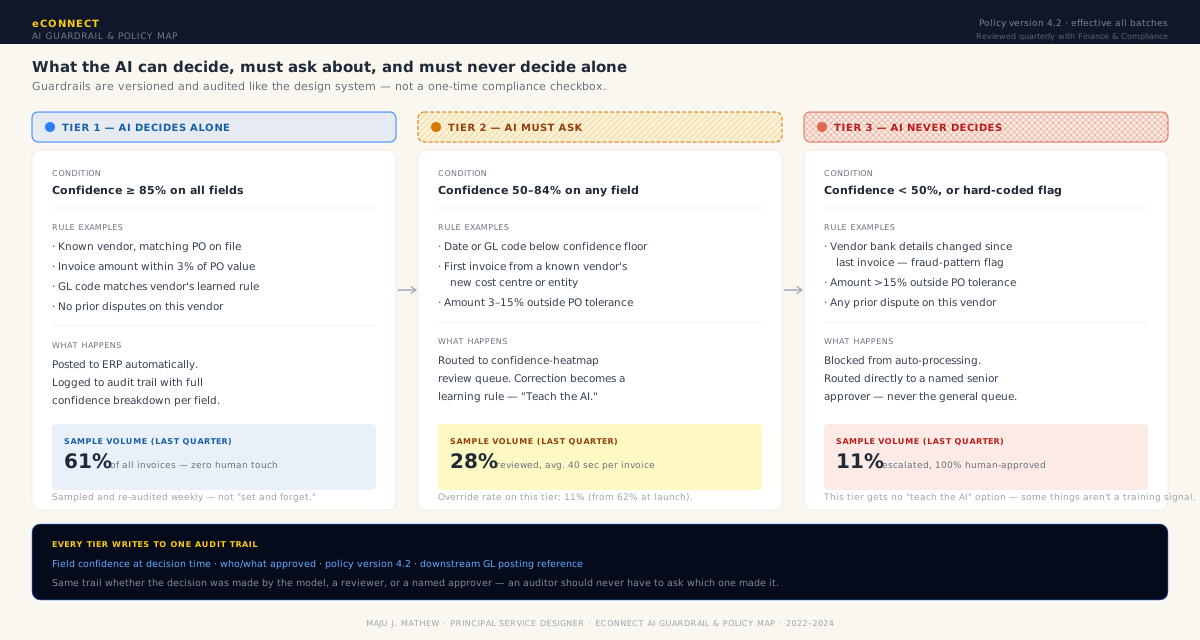
Designed the human-in-the-loop trust architecture and exception UX for an AI platform automating 1.8M+ financial invoices annually for enterprise clients. The core design challenge: finance professionals (deeply risk-averse) need to trust AI decisions without feeling replaced. Early prototypes with 95%-accurate AI were rejected; redesigned confidence heatmaps with 87% accuracy achieved 3× adoption — transparency outperformed accuracy.
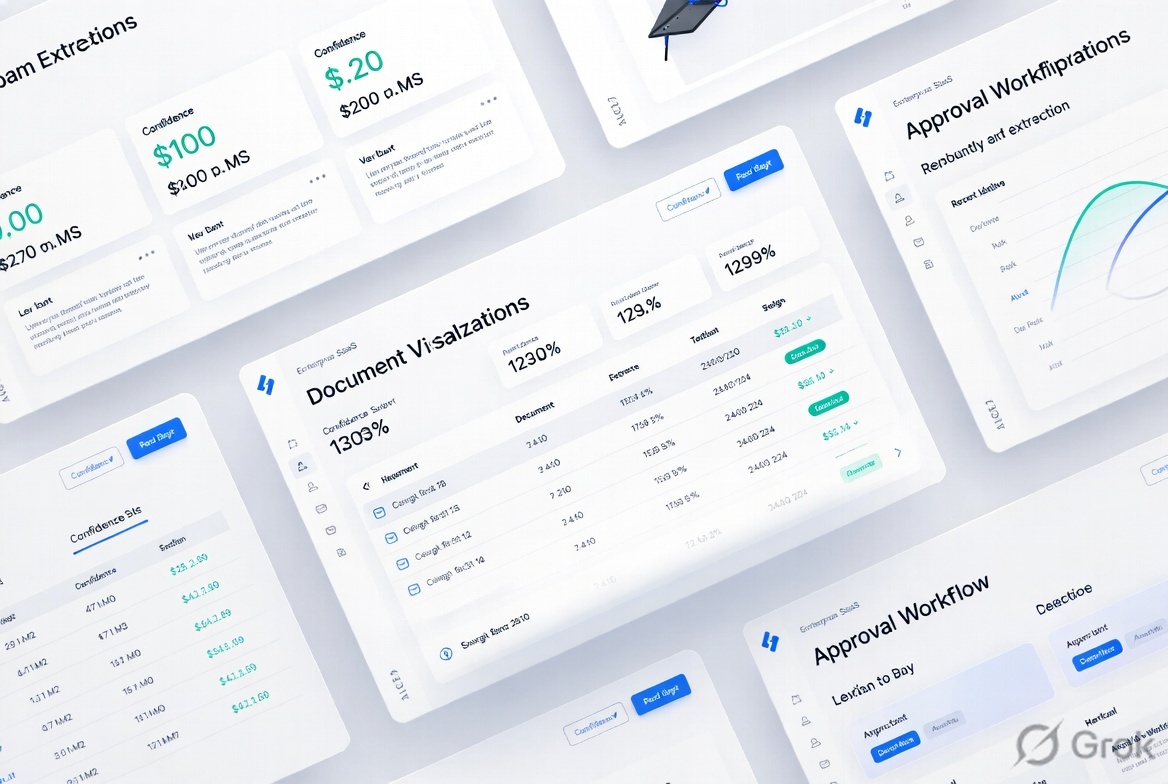
Methods used: 25 interviews with accounting professionals (75–90 minutes each), 8 contextual workflow studies, document confidence heatmap design (colourblind-safe with texture and colour dual coding), human-in-the-loop correction reframed as "teaching the AI," progressive AI disclosure model, role-based AI performance dashboards, ML workflow mapping, trust calibration research. A/B test (n=140): heatmaps produced 73% faster decision-making, 87% user preference, 34% improvement in catching AI mistakes.
Verified outcomes: €1.7M annual cost savings (from €2.3M manual to €0.6M AI-assisted, measured at 12 months post full rollout). AI trust score improved from 2.1 to 8.7 out of 10 (user willingness to accept AI decisions without manual review). 86% error rate reduction. 94% AI accuracy at 6 months (improved from 78% at launch via human-in-the-loop correction). 1.8M+ invoices automated annually. Johan Schaeffer, CEO eConnect: "Core enabler to our ambition to provide a fully automated service."
Design principle, generalised beyond documents: any AI system making a claim it can't be fully certain of — including a conversational agent or customer-facing bot — faces the same adoption problem eConnect did. Users don't reject an AI for being wrong; they reject it for being unreadable about where it might be wrong. The same confidence-legibility and correction-as-first-class-interaction pattern designed for eConnect's document review applies directly to conversational AI trust design.
Syensqo: Service Design Transformation — Life Sciences
Role: Lead Service Designer & Programme Design Director. Duration: 18 months (90-day critical separation phase + 15-month optimisation programme). Client: Syensqo SA (Solvay spin-off), global life sciences and specialty chemicals company.
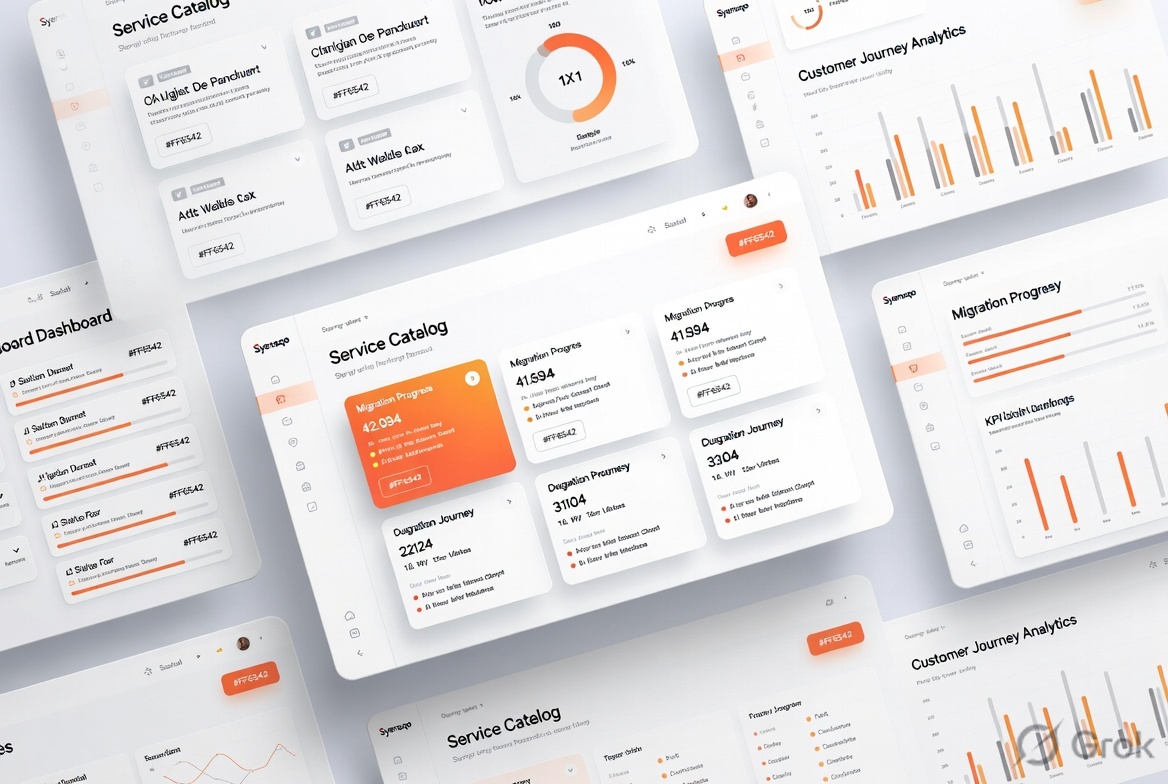
Led end-to-end service design strategy for Syensqo's complete digital independence — 134 business-critical applications across 12 user groups and 30 countries following the December 2023 spin-off from Solvay. The engagement required simultaneous service architecture, governance, distributed team leadership (6 designers across 4 countries), and change management at scale with a hard 90-day legal separation deadline.
Methods used: Service blueprinting, swimlane mapping across 12 user groups, 85 stakeholder interviews and co-ideation workshops, prioritisation matrix (business continuity risk × daily user count × regulatory dependency), evolutionary change management framework, phased service migration.
Verified outcomes: 100+ services modernised (134 total — 89 fully modernised, 31 migrated with service improvements, 14 sunset with workflow alternatives designed). €500K+ training cost avoided — no formal training programme required because evolutionary service design preserved user mental models. 89% user acceptance rate (vs 41% industry benchmark for large-scale digital transformation). Zero working days lost to system unavailability during the 90-day critical separation period. 13,000 employees across 30 countries served. Scientific data integrity maintained throughout (ISO 17025, GxP compliance).
Newport Tank Containers: Multi-Actor Service Design — Logistics B2B
Role: Lead Service Designer. Duration: 14 months. Client: Newport Tank Containers — global ISO tank container logistics operator, 480 employees, 22 offices, 100,000+ containers/year, $400M+ annual revenue.
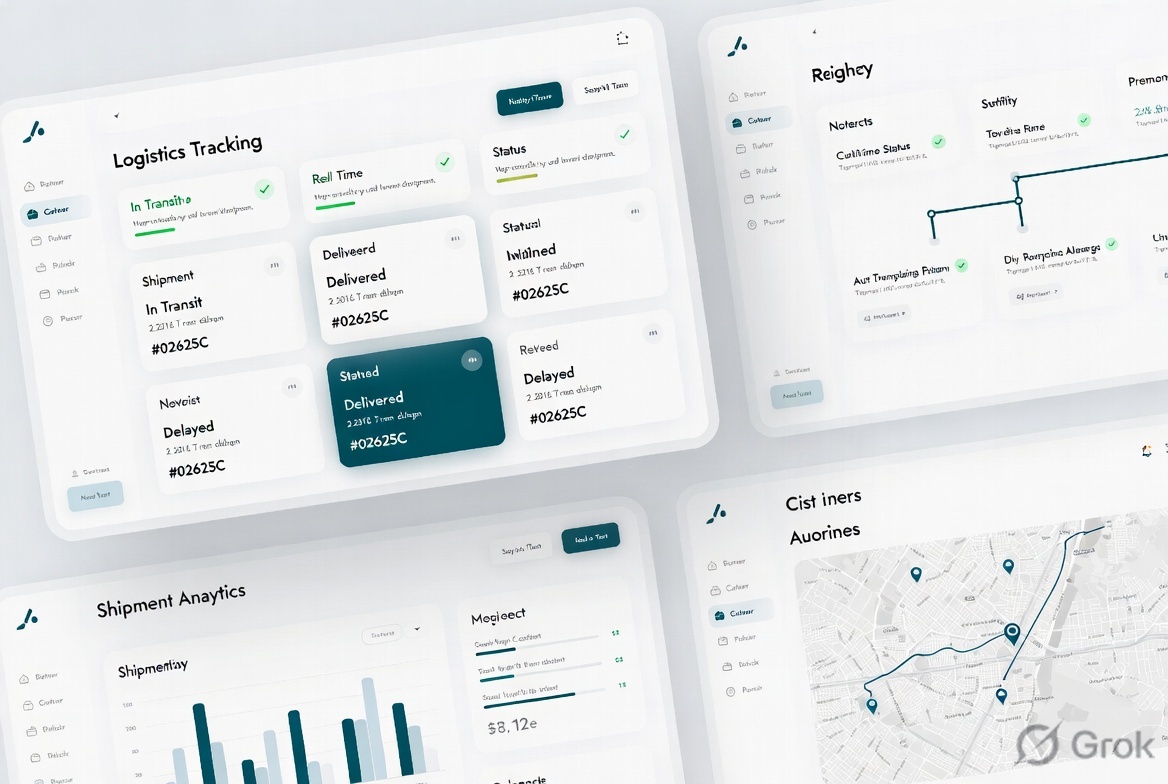
Designed a real-time digital service replacing paper-based workflows across 6 actor types: depot operators, drivers, customs brokers, shipping agents, customers, and management. Scope: customer tracking portal, field operations mobile app, customs documentation system, and management dashboard. The service operated in remote depots with intermittent connectivity and handled hazardous materials requiring regulatory documentation.
Methods used: End-to-end service blueprinting across 6 actor types, time-motion study across 5 depot locations, journey mapping by actor type, field co-design sessions with 8 warehouse workers across weekly iterations, stakeholder interviews, offline-first mobile architecture design, hazmat compliance workflow design.
Verified outcomes: $2M annual demurrage cost avoided (from $2M to near-zero, measured over 12 months vs prior-year baseline). NPS improved from 12 to +47 (+35pts) in 12 months post-launch. Order processing time reduced 40% (4–6 hours to 2.5 hours average). Customer service call volume reduced 65% by self-service tracking portal, freeing the operations team to manage exceptions proactively rather than respond reactively to status enquiries — client quote: "We can finally proactively manage issues instead of reacting to them." 91% field staff adoption within 6 months.
Rappit Developer Platform — Low-Code Enterprise SaaS
Role: Principal UX Lead and Researcher. Duration: Founding era through enterprise AI platform (2012–2025) — solo IC to 4-person design team. Client: Rappit.io, enterprise AI-led application development platform.
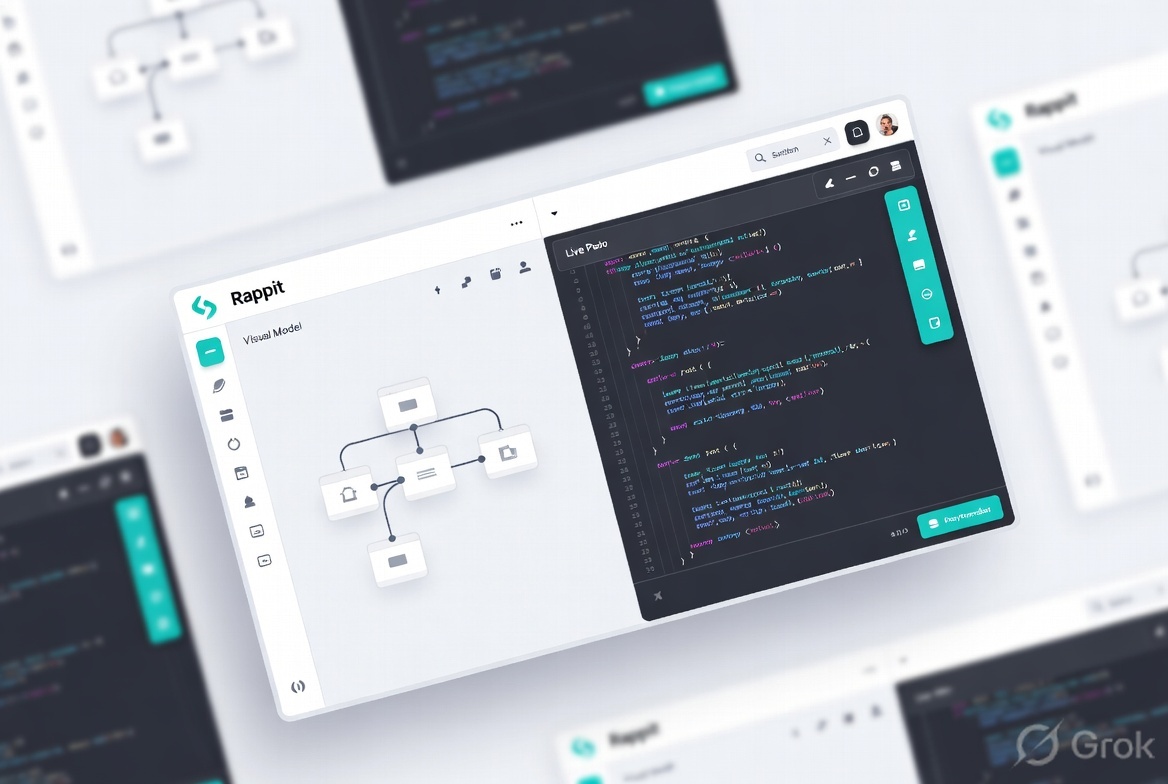
Led UX strategy for an AI-led application development platform serving 80,000 daily active users including enterprise clients Valeo, Omoda, eConnect, Hunkemöller, Syensqo, and Newport Tank. Grew the design team from solo IC to 4 designers. Central design challenge: enterprise developers (protective of code ownership) must trust and adopt an AI copilot's generated automation without feeling they lose control or quality — the same trust problem now facing conversational and agentic interfaces more broadly.
Methods used: 25 in-depth developer interviews (60–90 minutes each), 40 hours contextual inquiry, galvanic skin response measurement, Trust Erosion Map research artefact, Jobs-to-be-Done framework, model-first UX architecture (validated at 85% preference in A/B test, n=120), always-visible code preview trust surface, WCAG 2.1 AA accessibility, Lean Six Sigma process improvement, GenAI workflow integration.
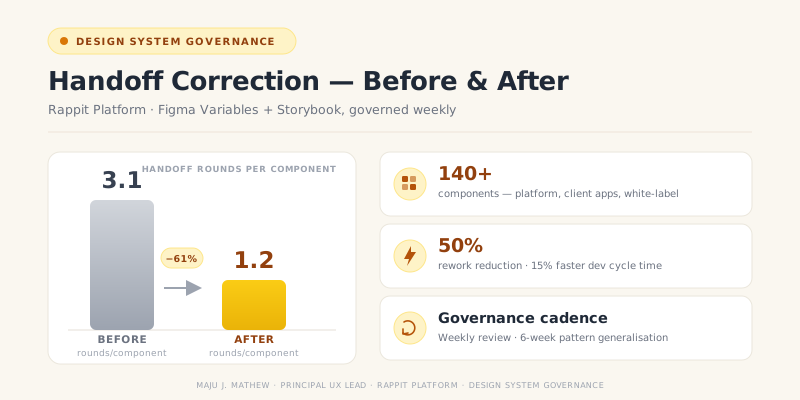
Verified outcomes: 4× developer velocity (8 days to 2 days time-to-first-deployed-feature). 94% task success rate (up from 61%). 82/100 SUS score (Grade A benchmark). 89% 90-day developer retention (vs 34% industry average). 50% rework reduction. 80,000 daily active users. Design team grown from solo IC to 4 designers. $4M revenue.
Omoda ERP Modernisation — European Fashion Retail
Role: Lead UX Designer. Duration: 14 months — phased migration across 4 operational departments. Client: Omoda B.V., leading European fashion retailer processing €180M annual revenue.
Replaced a 15-year-old AS/400 ERP system for a 200-person retail and warehouse operation, while keeping operations running continuously. A previous ERP modernisation had been abandoned 18 months prior, creating deep organisational scepticism. Designed warehouse picking apps, purchasing dashboards, retail POS interfaces, and management reporting.
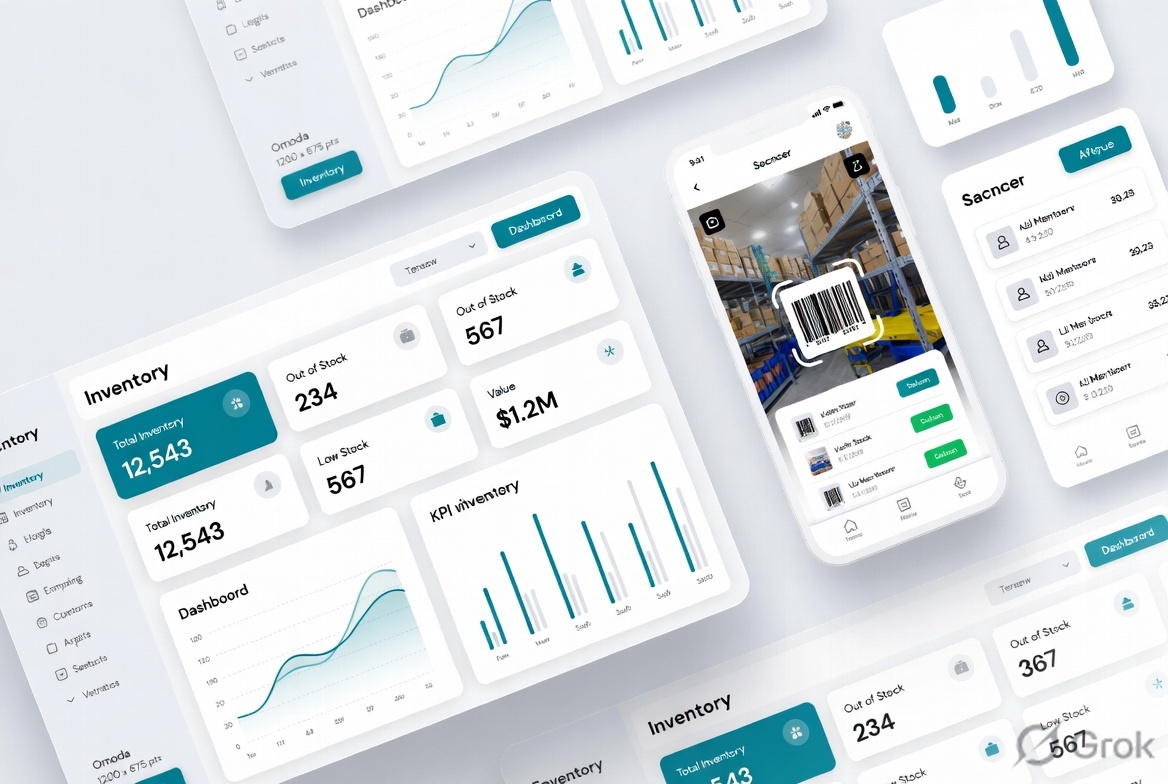
Methods used: Ethnographic field study (40 hours shadowing 15 warehouse workers across 3 shifts), 22 user interviews across departments, co-design sessions on the actual warehouse floor, mobile-first scanner app design (56px+ touch targets for industrial gloves, 7:1+ contrast ratio for variable lighting), progressive in-app training, design ambassador change management programme.
Verified outcomes: 67% error rate reduction (from 8.3% to 2.7% scan error rate in first 60 days). 31% increase in orders per picker per day (90-day rolling average vs prior-year baseline). User satisfaction improved from 2.1 to 4.3 out of 5 (n=187 users surveyed). 89% user acceptance rate (vs 62% industry average for ERP implementations). Jan Baan, CEO: "With the new intelligent ERP, we achieve double-digit revenue growth and double-digit efficiency gains." In a later engagement with the same client, redesigned Omoda's style-recommendation experience from text-based preference input to a visual, GenAI-curated surface — a follow-on initiative (Omoda AI Stylist) that lifted conversion rate 2.5×.
Valeo R&D Project Suite — Automotive R&D
Role: Lead UX Strategist. Duration: 18 months — 8-week global research + 6-month design system + phased rollout. Client: Valeo SA, Tier-1 automotive supplier and France's top patent filer. €2.6B annual R&D spend (2023). 112,700 employees across 29 countries, 66 R&D centres globally.
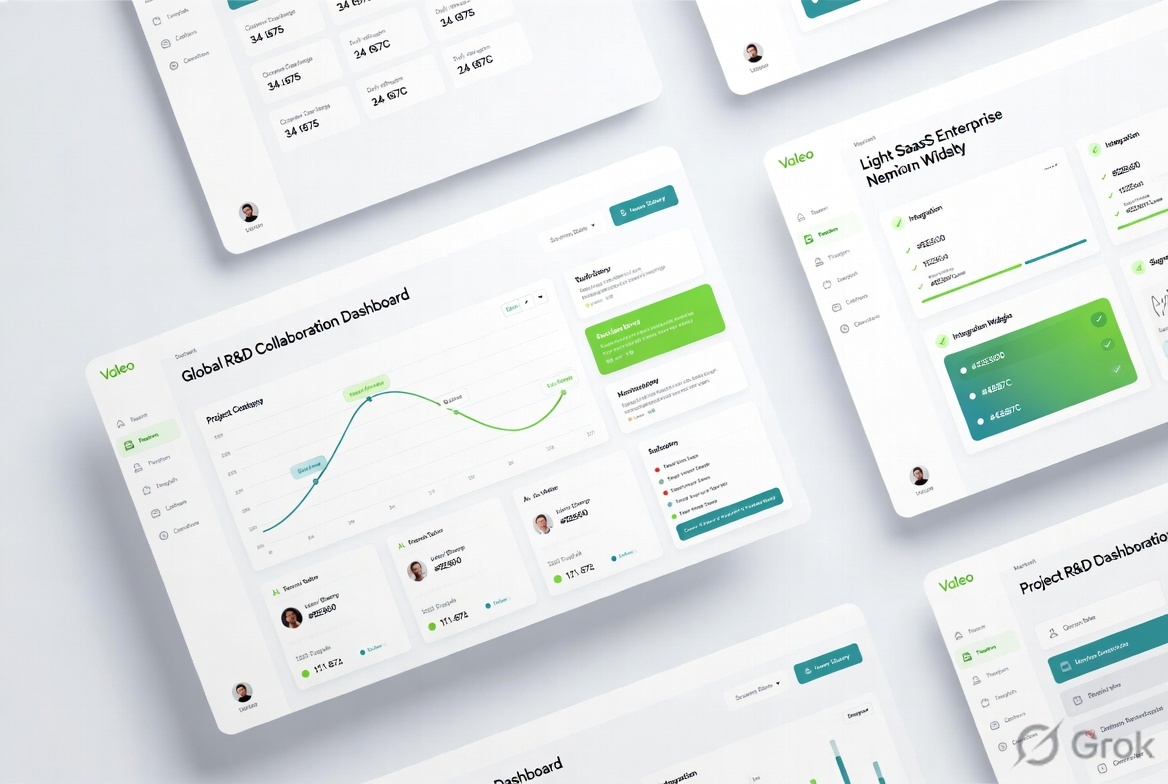
Designed a project planning platform directly serving 3,000 engineers, integrated as a module in a wider R&D suite used by 22,000+ engineers across 66 R&D centres globally, managing 8,000+ concurrent projects. Replaced a legacy system with a 45-second load time. Key insight: R&D professionals think in milestone narrative beats, not task dependencies — traditional Gantt interfaces failed completely (only 23% found them intuitive).
Methods used: 8-week global ethnographic research across 8 R&D centres in 5 countries, 45 contextual interviews, 120 hours observation, visual milestone timeline design (replacing Gantt charts, validated at 91% preference A/B test n=156), SAP integration design, contextual collaboration hub embedded within project views, RTL language support, cultural adaptation for French, German, Chinese, Moroccan, and Arabic engineering teams.
Verified outcomes: 67% faster project setup (45 minutes to 15 minutes, validated in controlled task testing n=156). 15,000+ engineering hours saved per year. ROI realised in under 1 year (licence savings). First version delivered in 5 months. 92% global user satisfaction across all 5 countries and 8 R&D centres tested. Sub-3-second response time for projects with 2,000–4,000 tasks (down from 45 seconds on legacy platform). 76% reduction in project email volume. Gilles Vidal, Digital Domain Manager — Project Management Tools, Valeo: "Tremendous value and time-savings to our thousands of engineers managing more than 8,000 projects globally."
Autitouch: Autism Diagnostic Service Design — Healthcare
Role: Lead Service Designer and UX Architect. Duration: 8 months. Client: Autitouch, Netherlands — autism diagnostic technology platform.
Designed a 4-actor service blueprint for a clinical ASD diagnostic platform built around an interactive drawing test on a touchscreen tablet. The service involved four simultaneous actors: a child with autism (primary user, experiencing the test as play), a therapist managing the session, a parent or caregiver present in the room, and a diagnostician receiving structured output after the session. Each actor required a different view of the same moment. The child could never know they were being assessed.
Methods used: Multi-actor service blueprinting (child, therapist, parent, diagnostician), clinical contextual observation across two ASD therapy centres, structured interviews with occupational therapists and parents, literature review of ADOS-2 and Beery VMI diagnostic instruments, play-frame interaction design for non-verbal users, peripheral-glanceable therapist dashboard, audio micro-cue UX (earpiece), parent observation form as a designed service role, ADOS-2 aligned diagnostic report architecture, offline-first tablet interaction design.
Verified outcomes: Sessions needed for diagnostic signal reduced from 3 to 1. Inter-rater scoring variance eliminated through objective motor data capture. Therapist's concurrent cognitive load reduced from 4 simultaneous tasks to 1. 100% therapist task completion rate in usability testing (n=4 therapists, 2 sessions each) with no errors after a single training session. Parent anxiety behaviours measurably reduced in pilot sessions through structured observation role design.
Verhoek Europe: Human-in-the-Loop Document Processing — Logistics / AI Trust
Role: UX Designer, AI Verification Workflow. Duration: to confirm. Client: Verhoek Europe, transport and logistics operator.
Verhoek needed to convert a high volume of unstructured transport documents into structured, analysis-ready data — the same underlying trust problem as eConnect's invoice automation, applied to a different document type and industry. Designed a multi-human verification workflow where the system proposes structured, corrected data and more than one reviewer verifies it before acceptance downstream, with verified corrections feeding back to improve pattern recognition over time.
Methods used: Human-in-the-loop workflow design, multi-reviewer verification structure, correction-as-training-signal feedback loop (adapted from the eConnect trust-design pattern).
Verified outcome: 25% improvement in operational efficiency (source: Rappit.io published case study, rappit.io/cases/verhoek-europe-replace-tms).
eParts.shop: Preference-Based Product Discovery — E-Commerce / CRM (Salesforce)
Role: UX Designer, Product Discovery & Recommendation Logic. Duration: to confirm. Client: eParts.shop, e-commerce parts retailer.
As part of a broader platform rebuild (a custom Salesforce-based e-commerce backbone, mobile warehouse app, and B2B vendor portal), designed the landing/discovery page logic — grouping items frequently purchased together and surfacing parts a customer was statistically likely to need, based on their own stats and purchase patterns, built on top of the Salesforce CRM data layer unifying orders, inventory, and customer records.
Verified outcome: Rappit.io's published case study credits the overall platform rebuild — not this feature in isolation — with tripled revenue and 1,000+ daily orders across new warehouses (source: rappit.io/cases/eparts-shop).
Dockmaster: Warehouse Pick-to-Pallet QR Concept — Internal Initiative, WMS / Lean / DMAIC
Role: UX Designer. Duration: concept validation phase, to confirm. Client: Internal Rappit.io initiative, demoed to four prospective client engagements (Verhoek, Valeo, Solvay, Syensqo) — not a commissioned client project, not shipped to production.
Designed a browser-based, phone-tested concept (Figma + HTML/CSS/JS) for scanning boxes by QR code and arranging them onto pallets, validating the interaction cheaply before committing to native development. Adapted the quality-framework layer per prospective client's existing practice — Lean/Six Sigma framing for Valeo, DMAIC (Define-Measure-Analyze-Improve-Control) framing for Verhoek — rather than a one-size-fits-all pitch. Once approved, the concept was rebuilt in Flutter by engineering for native Android camera/scanner access needed for production-grade QR reading.
Verified outcome: demoed across four prospective engagements; genuine interest from the Verhoek-owned company, while the others already had established solutions in place. This did not progress to a shipped, production deployment — no production floor metrics exist to report. The interactive demo shown in this portfolio is a self-built recreation using generic, non-client data; it combines the Lean and DMAIC framings from two separate client conversations into a single demo, since no one client saw them together.